
No products in the cart.


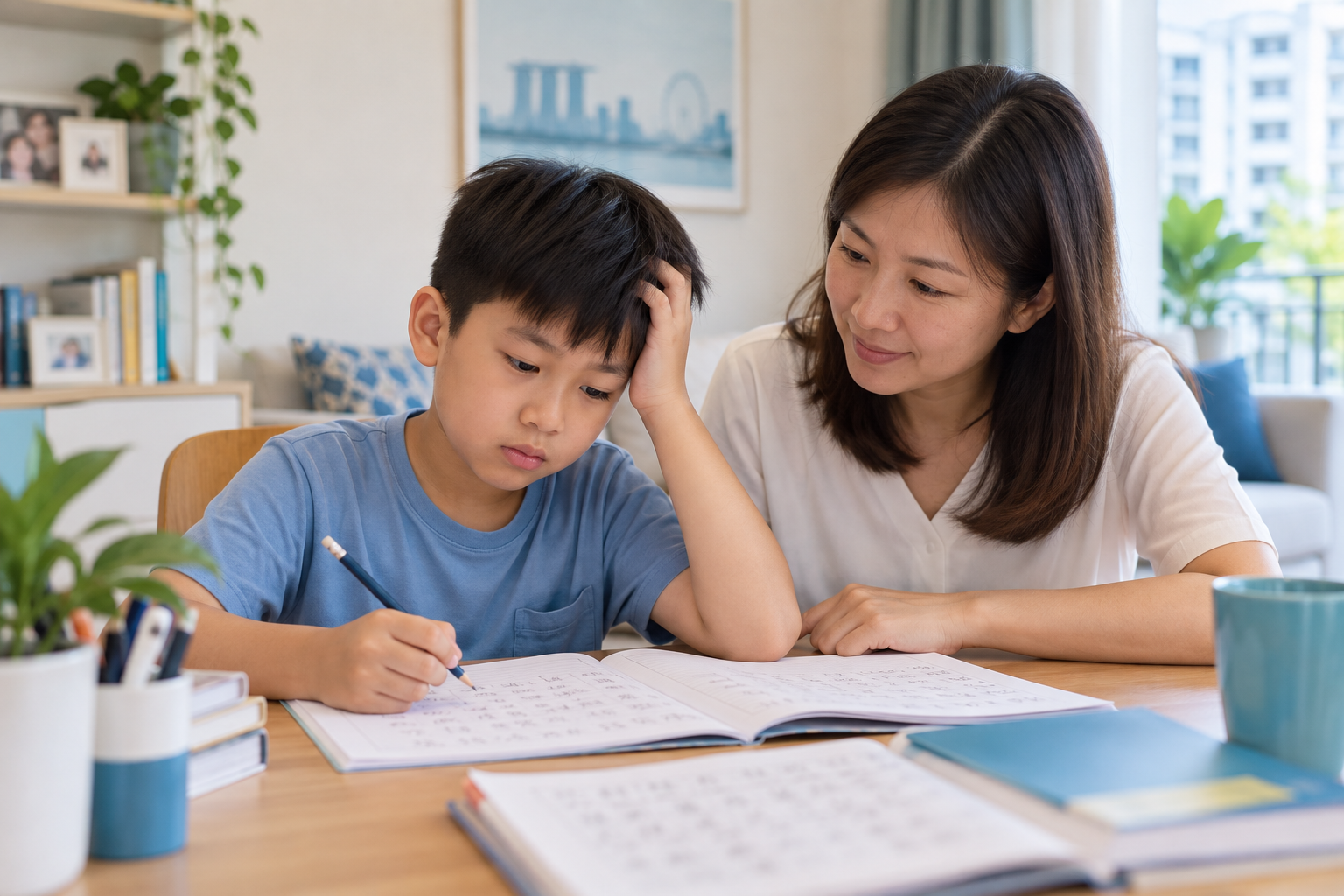
When a child is doing badly in Chinese, the concern is often about more than grades. Revision may take hours that could go towards other subjects. Homework may end in tears, and parents may worry about how Mother Tongue results will affect secondary school choices. It is understandable to consider an assessment or ask whether exemption would help.
Before making that decision, it helps to understand what a “Chinese dyslexia test” can tell you.
To my knowledge, there is currently no commercially available, standardised Chinese dyslexia diagnostic test normed for children in Singapore. Psychologists may use informal tasks they have developed or adapted to examine a child’s Chinese literacy skills. These can reveal useful patterns, but they should not be presented as a stand-alone diagnostic test.
I previously worked as a Chinese assessor for the Dyslexia Association of Singapore. Its Chinese profiling service helps identify a child’s literacy needs and guide intervention. Profiling is different from a formal psychological diagnosis of dyslexia.
Tests developed elsewhere also require care in interpretation. For example, a test using Traditional Chinese characters and Hong Kong norms may not reflect the experience of a child learning Simplified Chinese in a Singapore school.
If you are considering an assessment, ask:
An assessment should also consider the child’s language exposure, learning history, progress with teaching and difficulties across subjects. Struggling with Chinese does not, by itself, establish dyslexia.
For some children, exemption may relieve significant distress and free up time for learning and rest. Those benefits matter. At the same time, a short-term gain can have longer-term consequences: fewer opportunities to develop the language, less confidence using it later, and implications for future study choices.
Before deciding, speak with your child and school about what has already been tried, whether targeted support or an adjusted learning pathway is possible, and how the current exemption and secondary school posting rules apply to your child. Consider both the emotional cost of continuing and what your child may give up by stopping.
The aim is not simply to secure a label or remove a difficult subject. It is to understand why your child is struggling and choose a path that supports their wellbeing and future opportunities.
Concerned about your child’s Chinese learning? Contact CHEERS to discuss the difficulties you are seeing and what kind of assessment or support may be appropriate.
Cheers Learning
Hi there 👋 How can we help
Cheers Learning